Spousal Sponsorship Immigration Medical Step-by-Step: Who Needs It and What to Expect

Summary:
In a spousal sponsorship, only the sponsored partner and any dependent children complete the immigration medical exam, while the Canadian sponsor helps with records, deadlines, and planning. IRCC usually sends medical instructions after the application is submitted, with 30 days to complete the exam. Results reach IRCC through eMedical and stay valid for 12 months. The excessive demand rule generally doesn't apply to sponsored spouses, common-law partners, or dependent children, though public health and safety grounds still apply.
Time to Read: ~7 minutes
What You’ll Learn:
Which partner needs the IME in a spousal sponsorship, and why the sponsor doesn't
Where the medical fits between application and decision
What to bring to the appointment
How excessive demand rules apply to sponsored partners
Next Steps:
Watch your IRCC account for medical exam instructions
Book the exam within the 30-day window
Gather medical records, a medication list, and any specialist letters
Book your appointment at one of our five GTA Panel Physician locations
The sponsorship application was in, the acknowledgment of receipt had arrived, and now there was a medical request waiting in their IRCC account. For one couple in the Greater Toronto Area, a Canadian citizen sponsoring the partner they live with, the first question was a simple one. Do we both need to do this?
The truth is that only one of them did.
In a spousal sponsorship, the person being sponsored completes the immigration medical exam (IME), along with any dependent children. Still, the couple treated it as a shared task, and that made each step easier. If you're in the same position, the team at Panel Physician can walk you through what applies to your family.
Who Needs to Complete the Immigration Medical Exam?

IRCC uses the medical exam to check whether an applicant is admissible to Canada on health grounds, so the requirement follows the people applying for permanent residence.
The Partner Being Sponsored
The sponsored spouse, common-law partner, or conjugal partner generally needs to complete an IME with an IRCC-authorized panel physician. In this couple's case, that was the partner living with the sponsor in Ontario and applying from inside Canada.
Dependent Children, Even If They're Not Coming to Canada
If the sponsored partner has dependent children, those children will likely need to complete an IME too, even if they aren't planning to come to Canada. IRCC requires dependants to be medically admissible if they may be sponsored in the future, and an inadmissible dependant can affect the principal applicant. Getting the medical done now helps avoid complications if the family’s plans change later.
Why the Canadian Sponsor Doesn’t Need an Exam
The sponsor is already a Canadian citizen or permanent resident, so they won't need to complete an IME. Their responsibilities sit on the sponsorship side of the application. That doesn't mean they're on the sidelines, though.
| Canadian Sponsor | Sponsored Partner | |
|---|---|---|
| Status | Canadian citizen or permanent resident | Foreign national applying for permanent residence |
| Immigration Medical Exam | Not required | Required after IRCC sends instructions |
| Main Responsibility | Sponsorship undertaking and eligibility | PR application and admissibility |
| Role Around the Exam | Helps gather records, track deadlines, and plan the visit | Attends the exam and answers health history questions |
Where Does the IME Fit in the Spousal Sponsorship Timeline?
The medical exam is one step in a longer process, and knowing where it falls helps couples avoid last-minute scrambling.
For most permanent residence applications, including family sponsorship, IRCC usually sends medical exam instructions after you submit the application. That differs from Express Entry, where upfront medicals often come earlier. The couple waited for their instructions rather than booking ahead.
Each Step in the Spousal Sponsorship Process
Application submitted: The sponsorship and PR applications go to IRCC together. Both partners are involved.
Acknowledgment of receipt: IRCC confirms the application is in process, and both partners receive the update.
Biometrics request: The sponsored partner provides biometrics if IRCC asks for them.
Medical instructions: IRCC asks the sponsored partner and any dependants to complete the medical exam, usually within 30 days.
IME appointment: The sponsored partner and any dependants complete the exam with an IRCC-authorized panel physician.
eMedical submission: According to Panel Physician, results are usually submitted within 5 to 10 business days.
Status update: The medical status usually appears in the IRCC account within about 30 days, and both partners can monitor it.
Decision: IRCC makes a final decision on the application.
The 30-Day Window After Instructions Arrive
Once IRCC sends the medical request, family members have 30 days to get the exam completed. The couple booked theirs within a few days, giving them some breathing room in case they needed to reschedule. Since processing times can vary, it's a good idea to check IRCC's processing times tool instead of planning around one fixed timeline.
Why Does the 12-Month Validity Matter
IME results are valid for 12 months from the exam date. If an application decision takes longer than that, IRCC may ask for a re-medical. The couple added the validity date to a shared calendar so they'd recognize the timing right away if a new request came in.
How the Couple Coordinated Their Appointment

With only one exam to book, coordination came down to timing, paperwork, and tracking dates.
Booking Around Two Work Schedules
Both partners worked weekdays, so they picked a Panel Physician location close to home and booked an evening appointment that let the sponsor come along. Panel Physician has five GTA locations open from 7 AM to 9 PM, seven days a week. Same-day or same-week appointments may also be available, depending on scheduling.
What the Sponsor Did to Help
While the exam itself belonged to their partner, the sponsor took on a fair share of the prep work.
Gathered medical records, vaccination records, and a current medication list
Kept a copy of IRCC's medical instructions with the rest of the paperwork
Added the 30-day deadline and the 12-month validity date to a shared calendar
Checked the IRCC account with their partner for the status update after the visit
If Children Are Part of the Application
Dependent children can often be examined at the same time, but keep in mind that some parts of the exam depend on age. A chest X-ray is required for applicants aged 11 and older, and blood tests for applicants aged 15 and older.
Working While the Application Is in Process
Sponsored partners living in Canada may be able to apply for an open work permit while their application is processed. If they plan to work in healthcare, childcare, or a similar field, a medical exam may be tied to that work too, so it's worth checking which occupations require an IME before accepting a job offer.
What Do I Bring to a Spousal Sponsorship Medical Exam?
Complete information saves time at the clinic and can prevent follow-up requests later. The couple packed a folder with these items.
IRCC's medical exam instructions
A passport or other government-issued photo ID
Glasses or contact lenses, if worn
A list of current medications and dosages
Specialist letters or records for any ongoing condition
Vaccination records
Any previous chest X-rays or TB test results
You can find the current services and fees listed on the Panel Physician website.
What Happens During and After the Immigration Medical Exam?
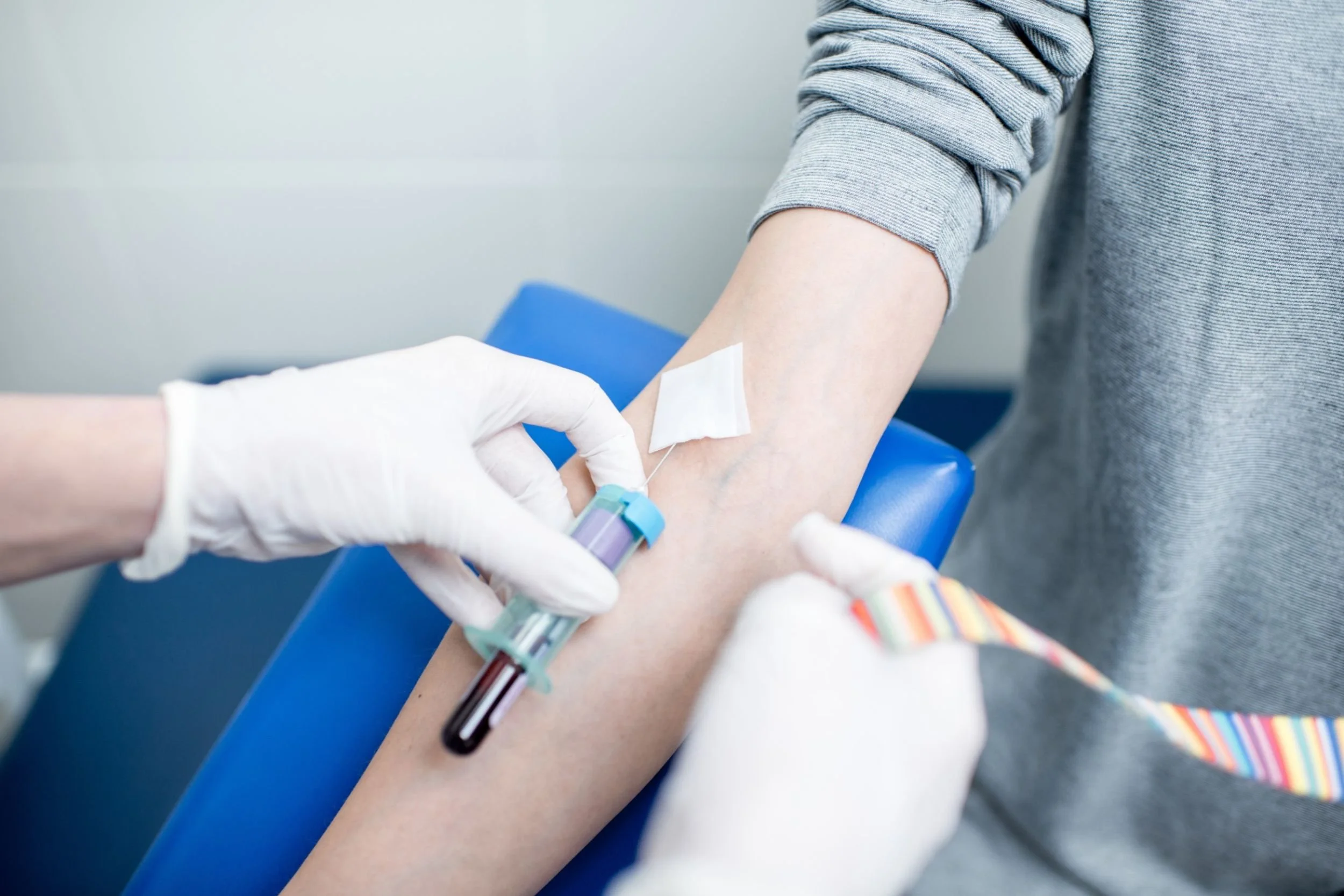
The exam itself is the same one most permanent residence applicants complete.
During the Appointment
The visit typically includes a medical history questionnaire, a physical exam, a chest X-ray for applicants 11 and older, blood tests for applicants 15 and older, and a urine test. If the sponsored partner is pregnant, the X-ray options change, and getting an IME during pregnancy works a little differently.
After the Appointment
According to Panel Physician, results are usually submitted to IRCC through eMedical within 5 to 10 business days. The applicant doesn't need to send anything to IRCC separately. The medical status usually appears in the IRCC account within about 30 days, and in some cases IRCC may ask for further testing, known as furtherance.
Related Reading:
What Happens If the Sponsored Partner Has a Health Condition?

For many couples, this is the biggest worry, and the rules are more reassuring than people often expect. IRCC's excessive demand rule, which looks at the projected cost of health and social services, generally doesn't apply to sponsored spouses, common-law partners, and dependent children.
Public health and public safety grounds still apply. A condition like active tuberculosis, for example, would usually need treatment before the application can move forward.
Honesty matters here. Disclose every condition and medication, even ones that seem minor. Misrepresentation can lead to a five-year ban from Canada, while a clear explanation backed by records gives IRCC what it needs to assess the file.
Preparing Together for One Exam
Only one partner needs to complete the medical exam, but there are still plenty of ways to tackle the process together. Once the instructions from IRCC arrive, booking the appointment, gathering the right records, and keeping an eye on the 12-month validity period can make things easier to manage. When you're ready to book, contact the team at Panel Physician. We can help you find a location and appointment time that works for both of you.